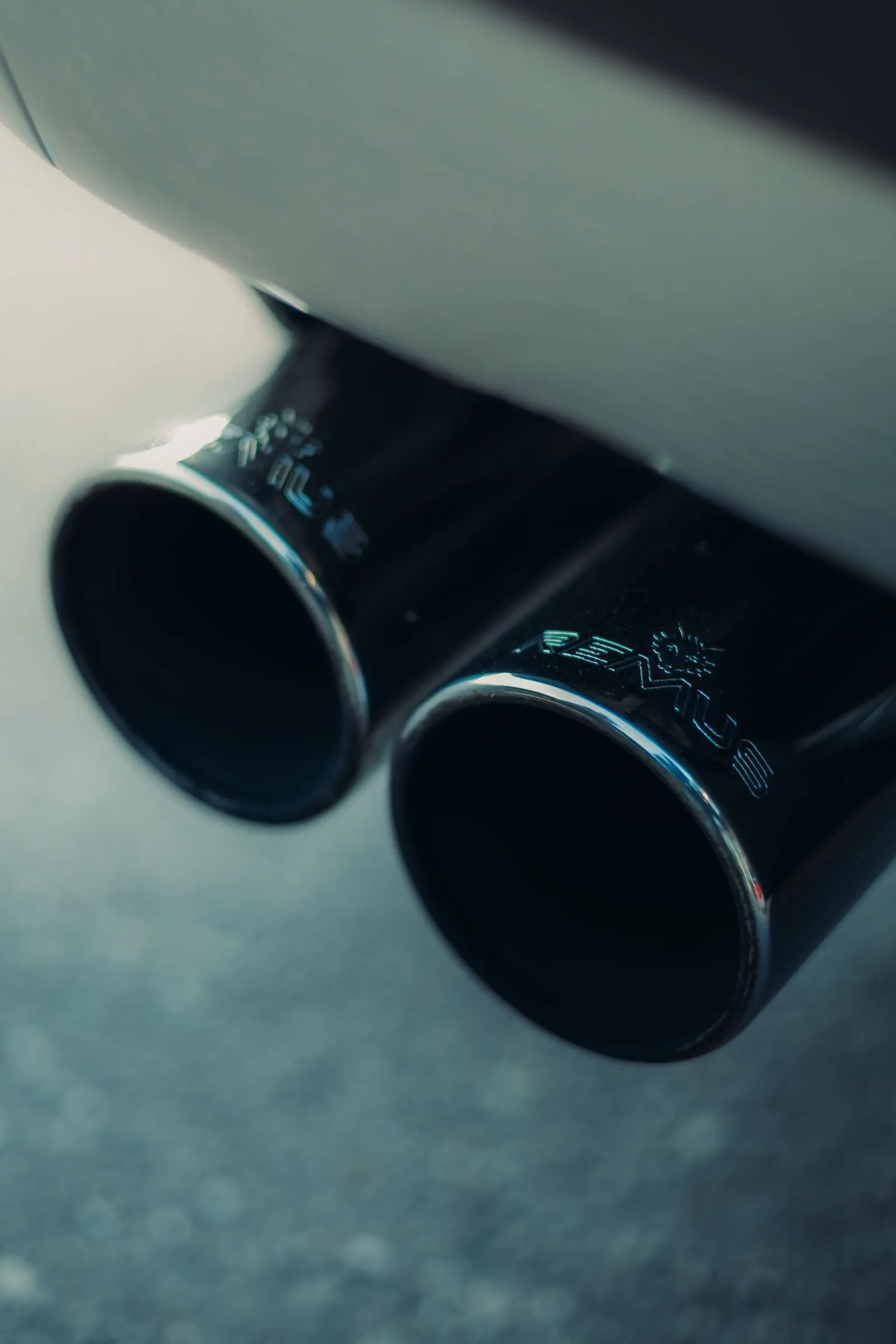
A cat back exhaust replaces everything behind the catalytic converter, and it is mostly a sound upgrade with a small power bonus. CORSA says to expect 10 to 20 horsepower. Published dyno tests we found show 4 to 17, and the best number came from a maker.
A cat-back exhaust is a bolt-on that changes the sound and can add a little power, at a much lower price than a turbo kit.
We did not install an exhaust for this guide. We read maker pages from MagnaFlow, CORSA, JEGS and Flowmaster, plus three published dyno tests and California's statute text, on 18 November 2026. No brand pays us, and there are no affiliate links on this page.
What's New in Cat-Back Exhaust Systems for 2026
MagnaFlow now sells its SPEQ Series cat-back exhaust line on its own store. The six systems we read range from $839 to $2,236, with 3" main piping on several.
The noise rules have not changed in California. Vehicle Code 27151 still sets 95 dbA as the pass mark for cars under 6,000 pounds, tested to the current SAE standard. Other states use softer wording, which we cover below.
What Is a Cat-Back Exhaust
A cat-back exhaust system replaces the pipes from the catalytic converter back to the tips. That includes the mid-pipe, the muffler, the tailpipe and the tips. The catalytic converter stays, so emissions parts are untouched.
Axle-back is smaller. MagnaFlow defines an axle-back as the parts after the rear axle. CORSA says it is three parts: a short pipe, the muffler and the tips.
Headers are bigger. JEGS notes that short of new headers and deleting the cats, this is the most complete performance exhaust upgrade. Removing the cats is illegal for road cars.
Cat Back Exhaust Dyno Results
Maker claims are easy to find. Independent numbers are not. Here is what three published dyno tests show.
| Test | Car | Gain | Source type |
|---|---|---|---|
| MBRP 3-inch Street Series (S7258409) | 2013 Ford Mustang GT | nearly 6 hp at the wheels | Magazine (MotorTrend) |
| 3SX cat-back only | NA four-cylinder | about 4 hp | Maker |
| 3SX headers, race pipe and rear system | Same car | 15 hp, 10 tq peak | Maker |
| Top Speed Pro-1 cat-back | Nissan 370Z | 17 hp, 11 ft-lbs | Maker |
The magazine test. MotorTrend put an MBRP system on a 2013 Ford Mustang that made 365 to 367 horsepower stock. It gained nearly 6 horsepower at the wheels with no tune. It lost a little below about 3,400 rpm, for example 2.43 hp at 2,500 rpm.
The maker tests. 3SX Performance found its cat-back system alone added about 4 hp on a car that made 159.6 hp stock. The full 3SX exhaust added 15 hp at peak. Top Speed reports 17 hp from its 370Z system.
What it means. Expect single-digit gains from a performance exhaust on most stock cars. Bigger numbers usually come with headers, a tune or both.
Cat-Back Exhaust Prices
We read MagnaFlow's SPEQ Series prices on its own store. All six are cat-back exhaust systems for specific cars.
| MagnaFlow SPEQ part | Price |
|---|---|
| 19698 | $839 |
| 19835 | $1,200 |
| 19680 | $1,229 |
| 19681 | $1,587 |
| 19685 | $1,789 |
| 19704 | $2,236 |
The median of the six is $1,214.50. MotorTrend's MBRP system cost $719.04 when tested.
Cost per horsepower. The MBRP gain of about 6 hp works out to $119.84 per horsepower. That is costly power. You are mostly paying for the sound.
Material matters. Stainless steel lasts longer than aluminized steel, especially where roads are salted. Check the grade in the spec sheet. Mandrel-bent tubing keeps the pipe diameter even through bends.
Cat-Back vs Axle-Back Exhaust
Buy an axle-back exhaust for sound on a budget. JEGS says axle-backs start from a few hundred dollars. They bolt on fast and change the tone.
Buy a cat-back for sound plus a little power. CORSA says the longer system usually gives more performance from larger mandrel-bent tubing. Flowmaster says a cat-back costs a bit more and takes more work.
Think ahead. CORSA notes you can add a mid-pipe to an axle-back later. Buying the whole system at once is usually cheaper, though.
Is a Cat-Back Exhaust Legal
A cat-back exhaust keeps the catalytic converter, so emissions are not the issue. Noise is.
California. California Vehicle Code 27151 says a car under 6,000 pounds that tests at 95 dbA or less, using the current SAE standard, complies. Section 27150.2 sets up a certificate of compliance using the same test.
Other states. SEMA's state list shows most states ban "excessive or unusual noise" without a decibel number. Texas bans cutouts and bypass valves. Illinois bans changes that make the exhaust louder than stock.
Our advice. Pick a system with a muffler, not a straight pipe. Ask the maker for its sound level if you live in California.
How to Choose a Cat-Back Exhaust System
Step 1: Decide on drone. A loud performance exhaust system can hum at highway speed. Many makers offer touring and street versions of the same system. Some newer cars have an active exhaust with valves; buy a system made to keep those valves working.
Step 2: Match pipe size to your engine. Bigger is not always better on a small engine. Follow the maker's fit for your car.
Step 3: Check the material and warranty. Good metal and a long warranty are worth paying for in snow states.
Step 4: Check ground clearance. Low cars can scrape mufflers and tips.
Step 5: Budget for install. Most systems bolt on, but rusted hardware can turn a two-hour job into a long one.
For more power, pair the exhaust with a cold air intake and a tune. For a big jump, see our turbo kit cost guide.
Get the workshop pack and new-issue alerts
Turbo-budget and stereo-quote worksheets, and an email when a new issue goes up. We'll send them after you confirm.
Cat Back Exhaust FAQ
What is a cat-back exhaust?
A cat-back exhaust replaces every part from the catalytic converter back. That means the mid-pipe, muffler, tailpipe and tips. The catalytic converter stays in place. It is a bigger job than an axle-back, which only replaces the parts behind the rear axle.
How much horsepower does a cat-back exhaust add?
Expect a small gain. MotorTrend measured nearly 6 horsepower on a 2013 Ford Mustang with an MBRP system. 3SX measured about 4 hp from its own system alone. Makers claim more: CORSA says 10 to 20 horsepower, and Top Speed reports 17 hp on a 370Z.
Is a cat-back exhaust legal?
In most states, yes, if it has a working muffler and is not too loud. California sets 95 dbA as the pass mark for cars under 6,000 pounds. Texas bans cutouts and bypass valves. Since the catalytic converter stays, emissions rules are not the issue.
Cat-back or axle-back: which should I buy?
Buy an axle-back if you mainly want sound and a lower price. Buy the full system if you want sound plus a little more power. It costs more and takes longer to install. MagnaFlow's systems run $839 to $2,236.
Does a cat-back exhaust need a tune?
No. A cat-back exhaust is built to work on a stock tune. MotorTrend's Mustang test gained power with no tune at all. A tune can add more, especially when you pair the exhaust with an intake or headers.
The Last Frame: Is a Cat Back Exhaust Worth It
A cat back exhaust is worth it if you want a better sound with a small power bonus. Expect roughly 4 to 17 horsepower and pay about $700 to $2,236. Choose a rust-resistant build, keep the muffler, and stay under 95 dbA if you live in California. If you only want sound, save money with an axle-back.